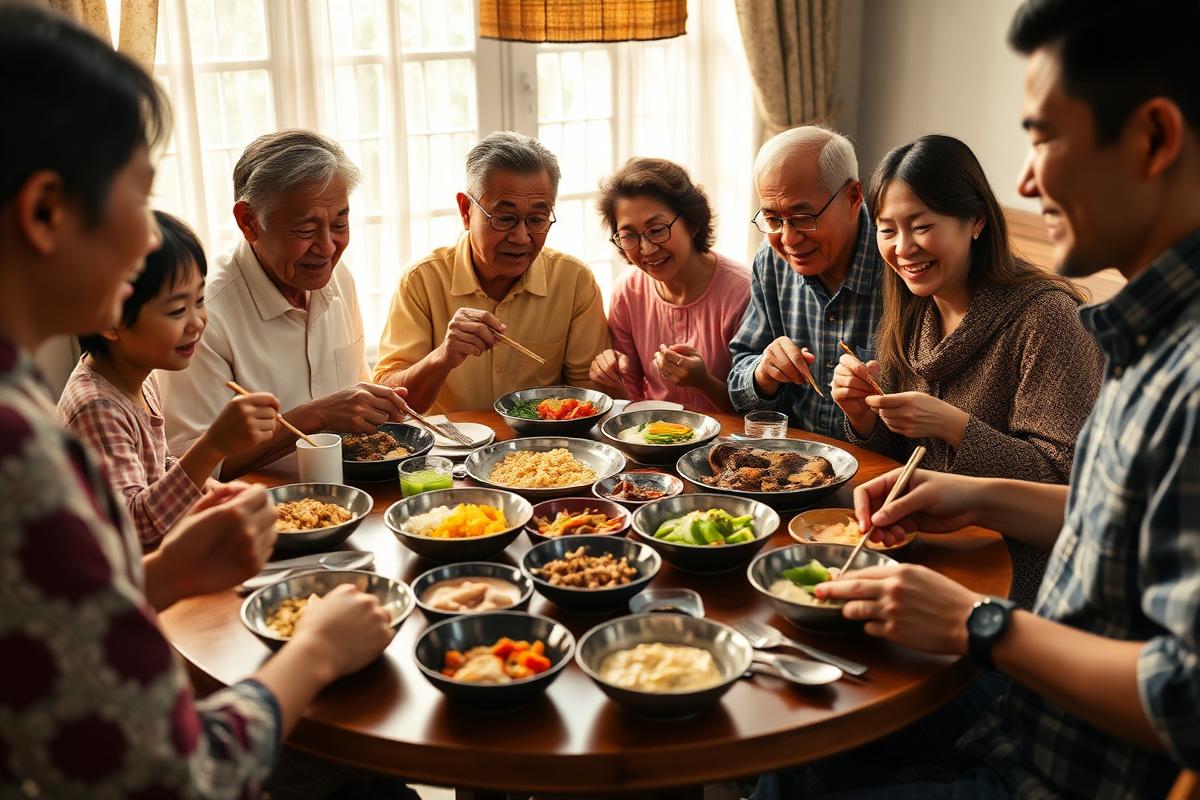
Family-style dining is one of the great pleasures of Chinese, Korean, Japanese and Vietnamese food culture, and one of the hardest environments in which to track what you actually ate.
When six dishes sit in the middle of the table and rice is refilled by whoever notices your bowl is low, portion awareness quietly disappears. Add banquet culture, elders serving guests as an expression of respect, and business drinking, and you have a setting that defeats most standard diabetes advice.
You cannot portion-control what you cannot see. In shared dining, the single most effective change is claiming your own plate rather than eating directly from communal dishes.
Five techniques that work in shared dining
1. Take a personal plate. Serve onto it once. This converts an invisible, unbounded intake into a visible portion you can actually assess.
2. Fill from the vegetables and protein first. Load greens, tofu, fish, egg and meat before rice or noodles arrive on your plate. This also naturally implements meal sequencing.
3. Use a smaller rice bowl, physically. Bowl size predicts intake more reliably than willpower. Ask for the small bowl at home and it becomes invisible within a week.
4. Decline the refill early and warmly. The refill is care. Accept the care and redirect it: "I'm full, but this fish is excellent, I'll take more of that." Redirecting is far more acceptable than refusing.
5. Slow the pace. Chopsticks already help. Putting them down between bites, and holding a conversation, meaningfully reduces total intake and flattens the curve.
The banquet and the drinking table
Business and celebratory drinking is a genuine occupational hazard in parts of East Asia, and alcohol interacts with diabetes in two directions: sweet mixers and beer raise glucose, while alcohol itself can cause delayed hypoglycemia hours later, especially on insulin or sulfonylureas.
Practical approach:
- Never drink on an empty stomach.
- Alternate every alcoholic drink with water or tea.
- Prefer dry options over sweet liqueurs, sweetened soju flavours and beer volume.
- If you use insulin or a sulfonylurea, check glucose before bed after drinking. Delayed nocturnal hypoglycemia is the real danger and it is under-recognized.
- Tell one person at the table that you have diabetes so someone would recognize a hypo.
Hidden sugar in familiar places
Several staples carry more sugar and sodium than people expect:
- Sweet-and-sour, teriyaki, char siu, hoisin, oyster sauce glazes
- Bubble tea, frequently 40–60g of sugar in a large cup
- Sweetened soy milk, canned coffee, packaged herbal drinks
- Congee eaten alone, smooth, rapidly digested, and often paired with pickles rather than protein
- Instant noodles, both for refined carbohydrate and sodium
None require elimination. Congee with egg, tofu or fish behaves very differently from congee alone. Bubble tea at half sugar and half size is a different drink.
Alcohol can cause hypoglycemia up to 12 hours after drinking, particularly with insulin or sulfonylureas. Check before bed, and eat something with slow carbohydrate if the reading is low-normal.
Respecting elders while protecting yourself
In many families, an elder serving you food is expressing love and authority simultaneously, and open refusal reads as disrespect. Techniques that preserve both:
- Accept the serving and eat some of it. Partial is acceptable; refusal often is not.
- Praise the specific dish. The recognition is what is being sought.
- Volunteer a job, pouring tea, serving others. Being active at the table reduces how much is placed in front of you.
- Ask the elder for help: "The doctor wants me to eat more vegetables, can you help me?" Enlisting an elder is far more effective than resisting one.
Movement that fits the culture
Post-meal walking is already normal across much of East Asia, the after-dinner walk, morning tai chi in the park, square dancing. These are not compromises; they are exactly what the evidence supports. Ten to fifteen minutes of walking after dinner blunts the post-meal peak, and doing it socially makes it sustainable.
Resistance training is the missing piece for most people. Two short sessions a week, bodyweight squats, push-ups, resistance bands, improve insulin sensitivity independently of weight.
How GLUCORAiQ fits
Log the plate you served yourself and the meal AI recognizes congee, bibimbap, pho, dim sum, hot pot and hundreds of other dishes, estimating glycemic load without asking you to translate them. Use Family Circle so the person who cooks can see the patterns too, in many households that is where the real leverage sits.
Frequently asked questions
Is congee bad for blood sugar?
Plain congee is rapidly digested and can raise glucose sharply. Adding egg, tofu, fish, chicken or vegetables and reducing the volume changes the response considerably.
How do I handle hot pot?
Hot pot is one of the friendlier options, load up on vegetables, mushrooms, tofu and thinly sliced protein. Watch the dipping sauces for sugar and sodium, and be mindful of noodles added at the end.
Can I still drink at business dinners?
Many people do, with precautions: eat first, alternate with water, avoid sweet mixers, and check your glucose before bed. If you use insulin or a sulfonylurea, discuss a specific plan with your clinician.
Is bubble tea completely off-limits?
No, but treat it as dessert. Order half or quarter sugar, choose a smaller size, skip the pudding and jelly toppings, and have it after food rather than alone.
My parents keep serving me more rice. What do I actually say?
Try: "I've had enough rice, but I'd love more of the vegetables." Accepting more of something else preserves the relationship while protecting the plate.
Educational content only. Not medical advice. Talk with your healthcare provider about alcohol, medication and your individual plan.