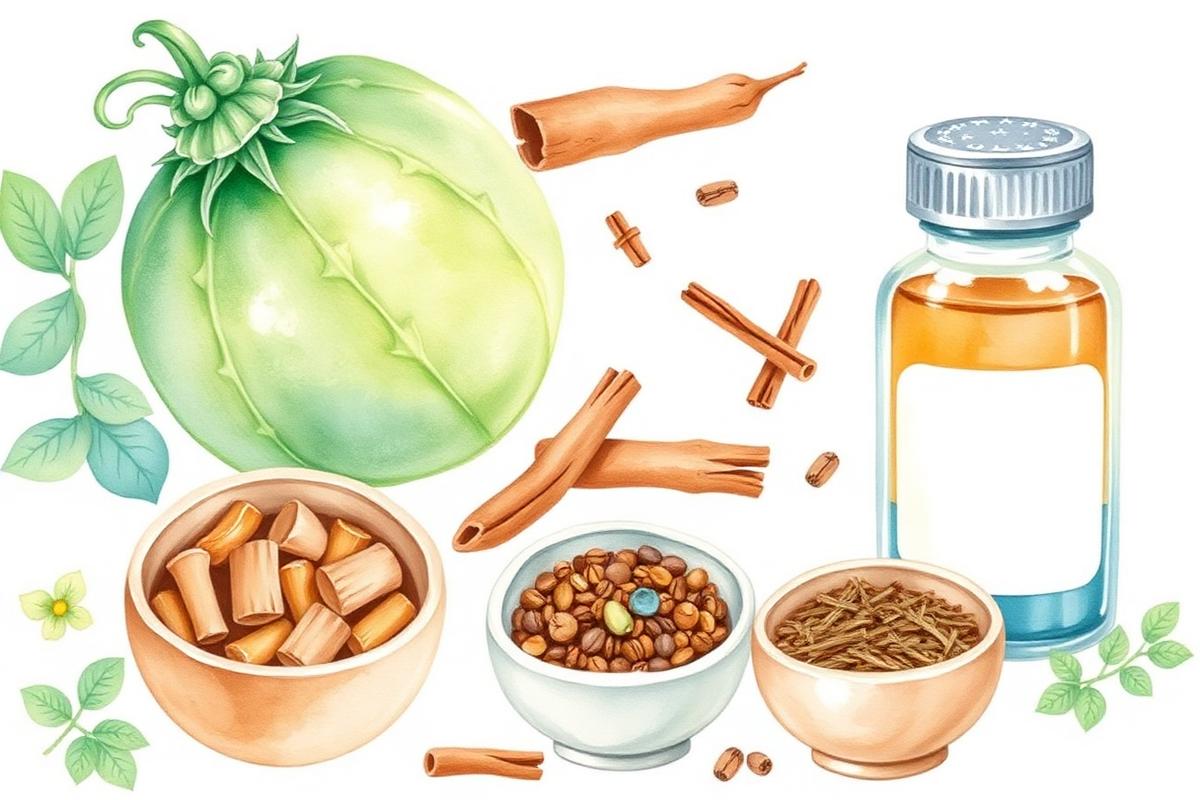
Across East Asian households, traditional medicine and modern prescriptions frequently sit side by side on the same shelf, and often go undisclosed to the doctor who wrote one of them.
That silence is the actual danger. Not the herbs themselves, most of which are harmless in culinary amounts, but the fact that clinicians are making dosing decisions without knowing what else is in the system.
Tell your clinician and pharmacist about every herb, tea, powder and supplement you take. Several traditional preparations affect glucose or interact with metformin, sulfonylureas and insulin, which can mean hypoglycemia, not just inefficacy.
What the evidence actually shows
Berberine. Derived from plants including Coptis chinensis (huang lian), berberine has the strongest evidence of the commonly used botanicals. Multiple trials and meta-analyses report clinically meaningful A1C and fasting glucose reductions, with mechanisms overlapping metformin's. It is not benign: it interacts with a wide range of drugs via CYP enzymes and P-glycoprotein, commonly causes GI upset, and should not be used in pregnancy. It is unregulated as a supplement, so purity and dose vary widely between products.
Bitter melon (ku gua, karela). Modest glucose-lowering signal in some trials, inconsistent across studies, generally weaker than the enthusiasm suggests. Fine as a vegetable. Risky in concentrated extract form alongside glucose-lowering drugs.
Ginseng (Panax ginseng, American ginseng). Some evidence of modest post-meal glucose reduction. Effects vary by species, preparation and dose. Interacts with warfarin and can affect blood pressure.
Cinnamon. Popular, heavily marketed, weakly supported. Meta-analyses are inconsistent, and cassia cinnamon contains coumarin, which is hepatotoxic in high chronic doses.
Green tea. Reasonable evidence for modest metabolic benefit as a beverage. Concentrated extracts have been associated with liver injury in rare cases.
Acupuncture. Evidence for glucose control is weak. Evidence for symptom relief in painful diabetic neuropathy is more encouraging, though study quality varies. As an adjunct for symptom management, it is a defensible choice; as a glucose therapy, it is not.
Where the real risks live
Additive hypoglycemia. If a herb genuinely lowers glucose and you take it alongside insulin or a sulfonylurea, the combined effect can drive you low. This is the most common serious problem.
Undisclosed pharmaceuticals in supplements. Regulatory agencies have repeatedly found unlabelled glyburide, metformin and phenformin in products marketed as purely herbal diabetes remedies. Phenformin was withdrawn from many markets for causing fatal lactic acidosis. Buying "natural" products from unregulated sources carries genuine risk.
Heavy metals and adulterants. Testing of some imported preparations has found lead, mercury and arsenic contamination.
Kidney and liver strain. People with diabetes frequently have reduced kidney function. Several herbal preparations are cleared renally or are hepatotoxic in high doses, and the margin for error is narrower than in a healthy person.
Replacement, not addition. The worst outcome is stopping insulin or metformin in favour of a herbal protocol. Diabetic ketoacidosis and severe hyperglycemia follow, sometimes fatally.
Never stop or reduce a prescribed diabetes medication to try a traditional remedy. If you want to try something, add it with your clinician's knowledge and monitor closely.
What traditional systems get genuinely right
It would be a mistake to dismiss the whole tradition. Several principles align well with modern metabolic science:
- Food as medicine. Bitter and astringent vegetables, seaweeds, fermented foods, mushrooms, legumes and green tea are all sound components of a diabetes-aware diet.
- Warm, cooked, unhurried meals. Slower eating reduces post-meal peaks.
- Movement as daily practice. Tai chi and qigong have reasonable evidence for balance, stress reduction and modest metabolic benefit, and adherence rates that Western exercise prescriptions rarely match.
- Attention to sleep, stress and seasonal rhythm. Both cortisol and short sleep measurably impair insulin sensitivity.
- Whole-person framing. Traditional consultations often address life context in a way twelve-minute appointments cannot.
A practical framework
Before adding anything, ask five questions:
- What is the evidence in humans with diabetes, not in cells or mice?
- Does it lower glucose? If yes, how does it interact with my current medication?
- Is the product tested by an independent laboratory?
- Does my clinician and pharmacist know I am taking it?
- How will I monitor, what will I measure, and when will I stop if nothing changes?
If a product cannot survive those questions, it is not worth the risk.
Frequently asked questions
Can I take berberine with metformin?
Some people do, under medical supervision, but the combination increases the chance of GI side effects and additive glucose lowering, and berberine interacts with many drugs. This is a decision to make with your clinician and pharmacist, not alone.
Is bitter melon safe to eat?
As a vegetable, for most people, yes. Concentrated extracts and juices are a different matter, they can add meaningful glucose lowering on top of medication and are not recommended in pregnancy.
My relative stopped insulin after starting herbs and says they feel fine. Is that possible?
Feeling fine is not the same as being in range, and in type 1 diabetes stopping insulin is life-threatening. Anyone who has stopped prescribed medication needs urgent glucose and ketone assessment.
How do I know if a supplement is contaminated?
You cannot know by looking. Prefer products with independent third-party testing certification, avoid unlabelled imports, and be sceptical of anything promising to cure or reverse diabetes.
Does acupuncture help diabetic nerve pain?
Some studies suggest symptomatic benefit for painful neuropathy, though evidence quality varies. It may be a reasonable adjunct alongside standard care, not a replacement for glucose control.
Educational content only. Not medical advice. Always consult your healthcare provider and pharmacist before starting, stopping or combining any medication, herb or supplement.