Ask a clinician what raises blood sugar and you will hear about carbohydrates, medication and activity. You will rarely hear about grief, and almost never about history.
Yet the physiology is not controversial. Chronic psychological stress elevates cortisol. Cortisol raises hepatic glucose output and reduces insulin sensitivity. Sustained over years, that is a direct pathway from adversity to hyperglycemia, independent of what anyone eats.
Adverse childhood experiences are dose-dependently associated with increased adult risk of type 2 diabetes. Trauma is not a side conversation in diabetes care. It is part of the mechanism.
What historical trauma means
Historical trauma describes cumulative wounding across generations from mass, culturally targeted events: forced removal from land, boarding and residential schools, the outlawing of language and ceremony, family separation, and continuing structural inequity.
Its effects are not metaphorical. They appear as elevated rates of depression, anxiety, substance use, disrupted attachment and chronic hypervigilance, each of which independently affects metabolic health, sleep and the practical capacity to manage a demanding chronic condition.
There is also emerging work on epigenetics, how severe stress can alter gene expression patterns that influence stress reactivity in subsequent generations. This research is still developing and should not be overstated, but it points in a coherent direction.
The daily loop
The mechanism plays out in ordinary weeks:
- Chronic stress raises cortisol and adrenaline, pushing glucose up.
- Stress fragments sleep; short sleep further impairs insulin sensitivity and increases appetite.
- Depression reduces the energy for cooking, walking, checking glucose and attending appointments.
- Glucose rises. The number is experienced as personal failure. Shame increases stress.
- The loop tightens.
Anyone who has lived this recognizes it. It is rarely named in the exam room.
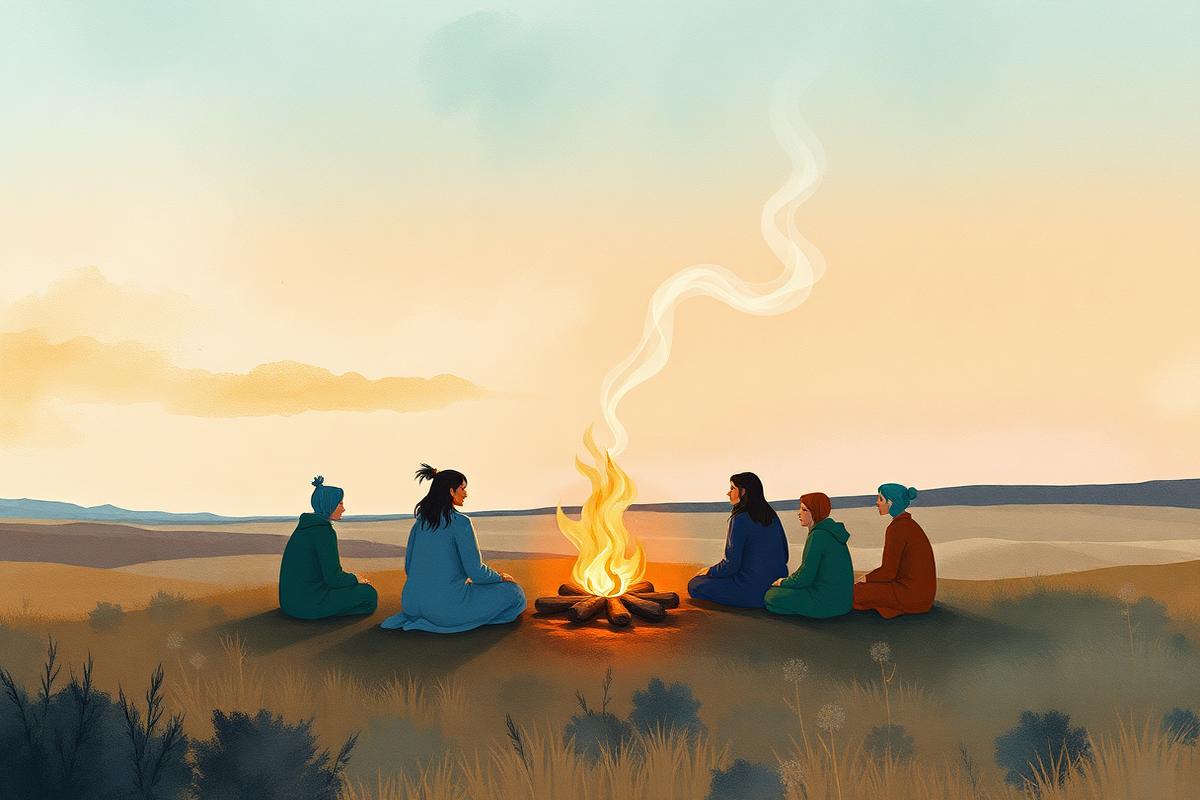
Culturally grounded healing works
The most encouraging finding in this area is that culture itself functions protectively. Programs that combine clinical diabetes care with cultural reconnection consistently outperform clinical care alone in Indigenous communities:
- Ceremony and spiritual practice, sweat lodge, talking circles, prayer, seasonal ceremony.
- Language revitalization, which has been associated in some studies with improved community mental health indicators.
- Land-based healing, hunting, fishing, gathering, canoe journeys, horse programs.
- Elder relationships, which restore continuity and belonging.
- Talking circles, which fit trauma-informed group work far more naturally than clinical group therapy formats.
- Community walking, running and dance programs, which deliver exercise, connection and identity simultaneously.
Cultural connectedness has been repeatedly associated with better mental health and resilience among Indigenous youth and adults. In diabetes care, culture is an active ingredient, not decoration.
Practical steps for individuals
Separate the number from your worth. A glucose reading measures the last few hours of physiology. It is not a moral verdict, and it is not a family history.
Name the stress in your appointment. "I am under significant stress and it is affecting my management" is clinically relevant information that can change your care plan.
Protect sleep as medicine. Consistent sleep timing improves insulin sensitivity measurably. It is one of the few interventions that costs nothing.
Move outdoors where you can. Combining activity with land and community delivers more than exercise alone.
Ask about trauma-informed and Native-serving mental health resources. Indian Health Service, tribal behavioral health programs, urban Indian health organizations and the StrongHearts Native Helpline are entry points.
Use peer connection. Talking with others in the community who manage diabetes reduces the isolation that keeps the loop running.
For clinicians and programs
- Screen for depression and diabetes distress routinely, not only when someone appears to be struggling.
- Ask about food access and safety before recommending a diet plan.
- Avoid language that assigns blame, "uncontrolled," "non-compliant", which reproduces the exact dynamic driving disengagement.
- Partner with cultural programs rather than treating them as unrelated to clinical care.
- Recognize that continuity of relationship is itself therapeutic in communities where institutional trust has been repeatedly broken.
Frequently asked questions
Can stress alone raise my blood sugar?
Yes. Stress hormones increase glucose production by the liver and reduce insulin sensitivity. Acute stress can raise readings within hours; chronic stress can raise A1C over months.
Is historical trauma a recognized concept in health research?
Yes. It is an established framework in Indigenous public health literature, describing cumulative intergenerational effects of collective, culturally targeted trauma on health and wellbeing.
Does epigenetics mean trauma is inherited permanently?
The research is early and often overstated in popular coverage. Some stress-related epigenetic changes appear transmissible, but they are also potentially modifiable. It is a reason for compassion, not fatalism.
Where can I find culturally appropriate mental health support?
Start with tribal behavioral health programs, Indian Health Service facilities, urban Indian health organizations, and Native-specific helplines. Ask your diabetes care team for a referral, it is a legitimate clinical request.
Can healing work actually improve my A1C?
Improvements in sleep, stress, depression and social connection are associated with better glycemic outcomes, and integrated cultural-clinical programs have reported improvements. It works alongside, not instead of, medication and nutrition.
Educational content only. Not medical advice. If you are in crisis, contact local emergency services or a crisis line immediately.