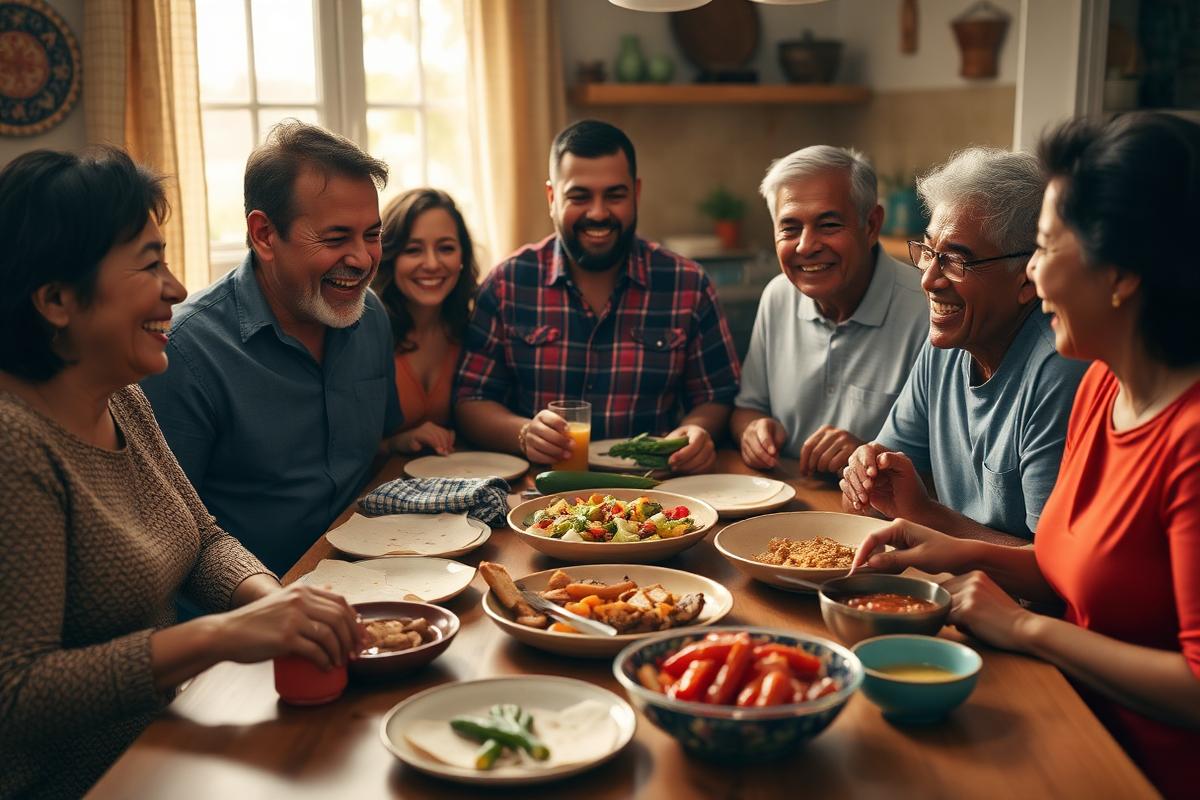
The hardest part of diabetes in a Latino household is rarely the carbohydrate math. It is the moment your tía puts a second plate in front of you and the whole table goes quiet waiting to see what you do.
Food in Latino families is not fuel. It is apology, celebration, memory, care and status all at once. A diabetes plan that ignores that will be abandoned by the third weekend.
Social eating is not a compliance failure. It is the strongest predictor of long-term wellbeing in most Latino households. The plan has to bend around the table, not the other way around.
The three pressures, named
The serving pressure. Portions are an expression of generosity. Small plate equals stingy host. This is not personal, it is how care is expressed.
The refusal pressure. Declining a dish reads as declining the person. "No, gracias" is heard as "I don't want what you made for me."
The invisibility pressure. Many people simply hide their diabetes at gatherings to avoid becoming the conversation. Hiding it means eating exactly like everyone else and dosing badly in the bathroom afterward.
Strategies that survive a real family gathering
Arrive fed. Eat protein and fiber before you leave, eggs, beans, Greek yogurt, nuts. You will be far more able to take a small portion of everything without arriving ravenous.
Take from everything, in small amounts. Refusing one dish is an insult. Taking a spoonful of all nine is a compliment. The total volume can still be reasonable.
Order the plate. Vegetables and salad first, then protein, then the starch last. The same food eaten in that sequence produces a measurably lower glucose rise than starch-first. This costs nothing and no one at the table notices.
Make the drink your quiet win. Agua fresca, horchata, soda and juice can carry more sugar than the dessert. Water, agua de jamaica sin azúcar, or sparkling water with lime removes a large spike without touching a single dish anyone cooked.
Walk after, together. A 10–15 minute walk after eating meaningfully blunts the post-meal peak. Invite a cousin. In many families this is easier to introduce than any food change, it just looks like a sobremesa that moved outside.
Bring a dish. Contributing one high-fiber, high-protein dish means there is always something on the table you can take a real portion of. Frijoles de la olla, ceviche, nopales salad, grilled meats and a big salad all belong on a Latino table without explanation.
Vegetables-first, starch-last meal sequencing has been shown to reduce post-meal glucose peaks substantially in people with type 2 diabetes. Same food. Different order.
Telling the family, or not
You do not owe anyone your diagnosis. But secrecy has a cost: no one adapts, and every gathering becomes a solo negotiation.
If you decide to tell, frame it as a request for partnership rather than an announcement of fragility:
- "The doctor says my sugar is high. I'm not sick, I'm fixing it. Can you help me by making sure there's something green on the table?"
- "I'm still eating your food. I just take less of the rice now."
- "If you want to help me, walk with me after we eat."
Families who are given a specific job usually do it. Families who are given a diagnosis usually respond with anxiety and unsolicited remedies.
For the cook in the family
If you are the one feeding everyone, you have more power over the household's health than any clinician:
- Cook beans from scratch when you can. Whole beans beat refried in both fiber and glycemic response.
- Swap refined flour tortillas for whole-corn where the dish allows.
- Let rice cool before reheating, resistant starch increases and the glycemic response drops.
- Put a real salad or a plate of raw vegetables on the table before the mains arrive. People eat what is in front of them first.
- Cut the sugar in the agua fresca by half. Almost no one notices after two weeks.
Kids and teens watch everything
Type 2 diabetes is rising fastest among Hispanic adolescents. What children learn at the family table becomes their default for forty years. The most powerful intervention available in a Latino household is not a supplement, it is the fact that a child grows up seeing vegetables on the table first and a walk after dinner as normal.
How GLUCORAiQ fits
Use Family Circle so the household shares meals, patterns and wins in one place, including the family member who cooks. Log a gathering plate exactly as it was served, and the meal AI will estimate glycemic load for pozole, tamales, mofongo or arroz con gandules without asking you to translate it into "chicken and rice." Over time you will know precisely which of your family's dishes you can eat freely, which need a smaller portion, and which need a walk afterward.
Frequently asked questions
How do I refuse a second plate without offending anyone?
Do not refuse the plate, control what goes on it. Serve yourself, praise the dish specifically, and offer to take some home. "Está buenísimo, guárdame un poquito para mañana" almost always lands better than "no."
Is horchata off-limits?
Not permanently, but treat it as dessert, not a drink. A single glass can carry 30–40g of sugar with almost no fiber or protein to slow it. Have a smaller glass with food rather than a large one alone.
Are tamales ever workable?
Yes, with portion honesty. One tamal alongside salad and a protein behaves very differently from three tamales alone. Log it and watch your own response, individual variation here is large.
My family keeps offering me herbal remedies for diabetes. What should I do?
Accept the care, verify the substance. Some traditional remedies interact with metformin, insulin or blood pressure medication. Bring the specific plant or product to your clinician or pharmacist before taking it.
How do I handle it when relatives comment on my weight or my plate?
Have one prepared sentence and repeat it without elaboration: "I'm working on it with my doctor." Repetition ends the conversation faster than explanation.
Educational content only. Not medical advice. Talk with your healthcare provider before changing your diet, medication or activity plan.