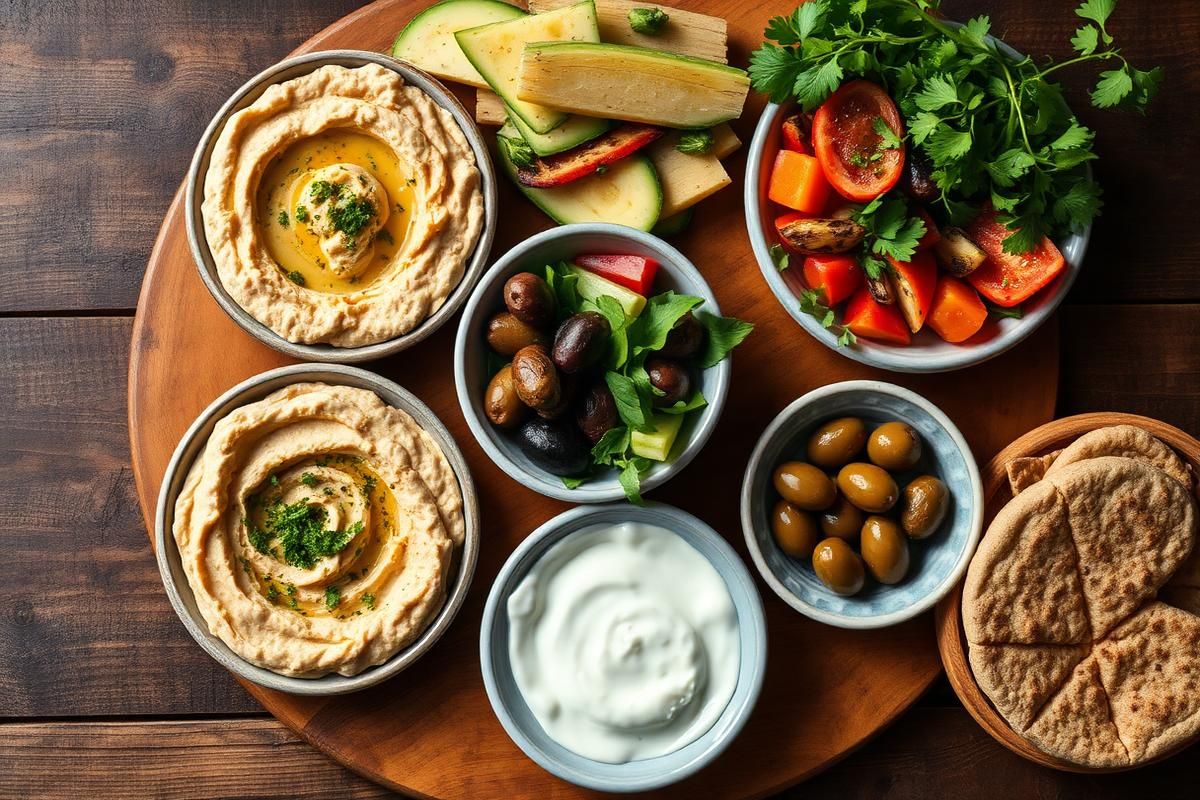
The Mediterranean diet is the most consistently evidence-supported eating pattern for metabolic and cardiovascular health. What is rarely said out loud is that traditional Levantine cooking, Lebanese, Syrian, Palestinian, Jordanian, already is a Mediterranean diet, and in some respects a better one.
Olive oil, legumes, herbs, vegetables, yoghurt, fish, nuts, garlic, lemon, tahini. The foundation is excellent. The problems are more recent: enormous quantities of white rice and refined bread, sugar-dense desserts served daily rather than occasionally, and sweetened drinks.
In the landmark PREDIMED trial, a Mediterranean diet supplemented with extra-virgin olive oil or nuts significantly reduced major cardiovascular events. Traditional Levantine cooking already delivers this pattern, if the refined carbohydrate load is controlled.
The foods worth protecting
Legumes. Chickpeas, lentils, fava beans, white beans. Hummus, foul medames, mujadara and lentil soup are among the most metabolically favourable dishes in any world cuisine, high fiber, high resistant starch, moderate protein.
Olive oil. Extra-virgin olive oil improves lipid profiles and insulin sensitivity, and is associated with reduced cardiovascular events. Use it generously and do not fear the fat.
Tabbouleh and fattoush. Herb-dense salads with lemon and olive oil, minimal grain. Tabbouleh is properly a parsley salad with a little bulgur, not a bulgur salad, the traditional ratio is the healthier one.
Labneh and yoghurt. Fermented dairy is associated with lower type 2 diabetes risk in multiple cohort studies. Plain, unsweetened.
Tahini. Sesame paste, healthy fats, protein, and it slows the glucose response of whatever it accompanies.
Herbs and spices. Za'atar, sumac, mint, parsley, cumin, garlic. Flavour without sugar or excess salt.
Fish and grilled meats. Grilled over fried is already the traditional default.
Where it goes wrong
Portion inflation of rice and bread. A mountain of white rice under the mansaf or kabsa, plus multiple loaves of pita, is where the glycemic load concentrates.
Refined pita replacing whole grain. Traditional breads made from whole wheat or barley behaved far better than modern white pita.
Daily sweets. Baklava, kunafa, maamoul, halva and basbousa combine refined flour, sugar syrup and semolina. As festival food, fine. As a nightly accompaniment to tea, not fine.
Sweetened tea and coffee. Three sugars per cup, six cups a day, is a substantial hidden load.
Juices and soft drinks. Increasingly common, and among the strongest drivers of the rapid rise in type 2 diabetes across the Gulf and Levant regions.
Rebuilding the plate
- Half: salads and vegetables, fattoush, tabbouleh, grilled vegetables, cucumber-yoghurt, pickles in moderation.
- A quarter: protein, grilled chicken, fish, lamb, kofta, chickpeas, lentils, labneh, eggs.
- A quarter: the grain, rice, bulgur, freekeh or bread. Choose bulgur and freekeh where possible; both have substantially more fiber than white rice.
Simple upgrades that change little culturally:
- Bulgur or freekeh instead of white rice in pilafs
- Whole-wheat pita instead of white
- Mujadara, lentils and rice together, instead of rice alone
- Hummus and vegetables as the pre-dinner snack instead of bread and crisps
- Fresh fruit instead of syrup-soaked pastry on ordinary days
- Unsweetened tea with cardamom and mint
Adding tahini, olive oil or yoghurt to a carbohydrate-containing meal slows gastric emptying and lowers the post-meal glucose peak. Traditional pairings were doing this long before anyone measured it.
Mezze is a strategy, not just a starter
A mezze spread is, structurally, an ideal diabetes meal: many small dishes, high vegetable and legume content, protein distributed throughout, and eating that is slow by design. If you build a meal from mezze and grilled protein and treat rice and bread as accompaniments rather than the base, you have engineered an excellent glycemic outcome without giving up anything recognizable.
Hospitality without harm
Refusing food is difficult in Arab hospitality culture, where feeding a guest generously is a matter of honour. The same techniques that work elsewhere apply here: take small amounts of many dishes, praise specific dishes by name, accept tea but ask for it unsweetened, and offer to take food home. Redirecting generosity toward the mezze and the grilled protein rather than the rice preserves the relationship and the plate.
Frequently asked questions
Is hummus good for blood sugar?
Generally yes, chickpeas are high in fiber and resistant starch, and tahini adds fat that slows digestion. The variable is what you eat it with; pair it with vegetables rather than large amounts of white pita.
Can I eat baklava?
Occasionally and in a small portion, after a balanced meal rather than alone. It combines refined flour, sugar syrup and nuts, so the sugar load is high even in a small piece.
Is freekeh better than rice?
Freekeh is young green wheat with substantially more fiber and protein than white rice, and it produces a gentler glucose response. It is a strong substitution in most rice dishes.
Is olive oil safe in large amounts if I am trying to lose weight?
It is calorie-dense, so quantity matters for weight, but trial evidence supports generous olive oil use within a Mediterranean pattern for cardiovascular and metabolic outcomes. Use it as the primary fat rather than adding it on top of other fats.
What about dates outside Ramadan?
Dates are nutritious but sugar-dense. One or two with nuts or yoghurt behaves very differently from a handful eaten alone.
Educational content only. Not medical advice. Consult your healthcare provider or dietitian about your individual eating plan.