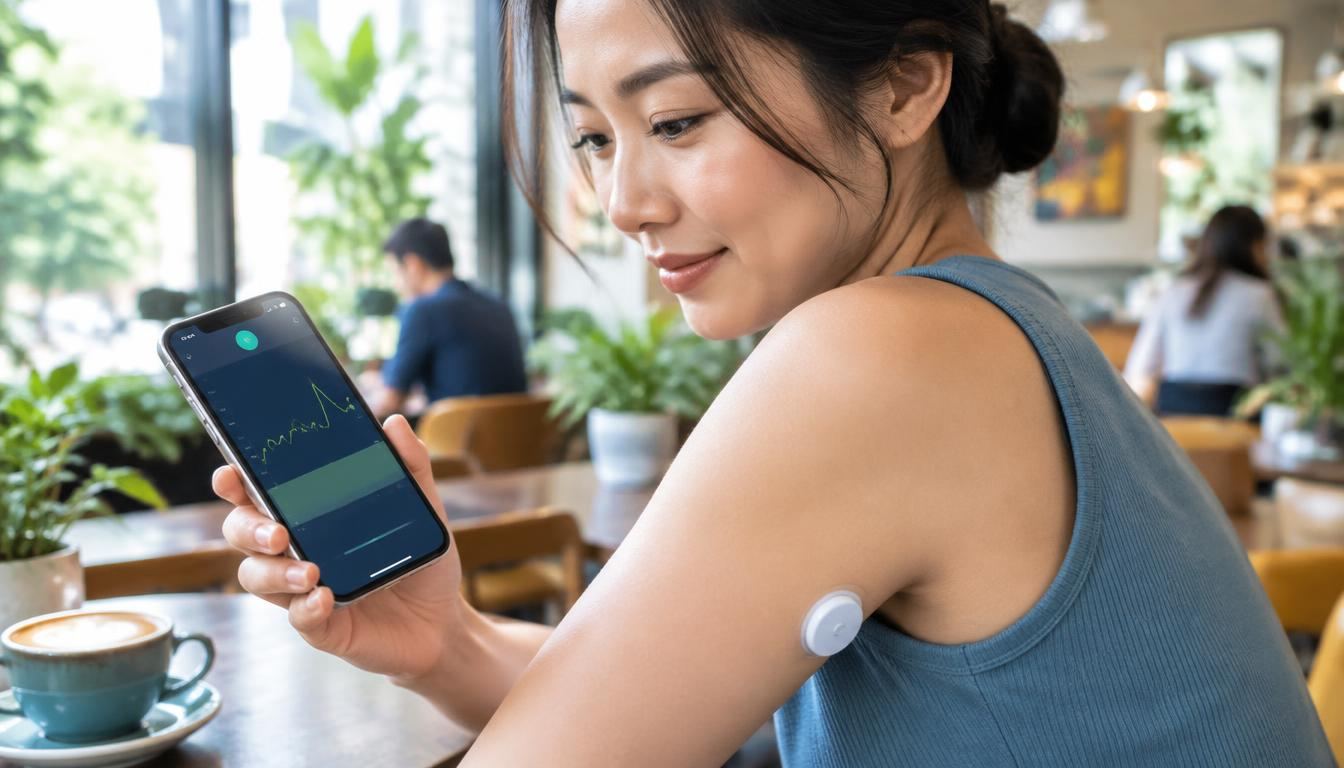
Over-the-counter continuous glucose monitors, such as Dexcom Stelo and Abbott Lingo in the United States, let adults who do not use insulin see their glucose in real time without a prescription. They are among the most searched health gadgets right now. Here is how to use one wisely.
What a healthy curve looks like
For people without diabetes, glucose usually stays roughly between 70 and 140 mg/dL, rising after meals and returning toward baseline within two to three hours. If you have prediabetes, you may see higher peaks or slower returns. These patterns are useful conversation starters with your clinician.
If you see readings that seem very high or very low, or you feel unwell, confirm with a fingerstick meter and contact your clinician. Sensors can be off, especially in the first day.
A two-week experiment plan
- Week one: eat as you normally do and log meals.
- Week two: test one change at a time, such as a walk after dinner, protein at breakfast, or swapping white rice for a brown rice blend.
- Compare the curves and keep the changes that make the biggest difference.
Try it in GLUCORAiQ™
Scan your plate with Meal iQ
Snap a photo of tonight's dinner and get carbs, fiber, protein and a culturally aware swap.
Avoiding "glucose anxiety"
Some people become stressed by every rise. Remember that a spike after birthday cake is normal. What matters is your average, how often you are in range, and how quickly you recover. Our positive relationship with numbers guide can help.
Try it in GLUCORAiQ™
Estimate your A1C change
See how small daily glucose shifts could move your A1C over 90 days.
See Your Potential Improvement
Based on clinical research, consistent tracking with AI insights can significantly improve outcomes.
Projected A1C (6 months)
↓ 0.7% improvement
5h
Saved monthly
24/7
AI insights
* Based on clinical research on diabetes self-management. Individual results may vary.
Frequently asked questions
Can an OTC CGM diagnose prediabetes?
No. Diagnosis uses lab tests such as A1C, fasting glucose or an oral glucose tolerance test.
Will insurance pay for it?
Usually not for OTC versions, though some HSA and FSA accounts may allow it. See our HSA and FSA guide.
Can I share CGM data with GLUCORAiQ?
You can log readings and connect supported devices, then see predictions and trends alongside meals and activity.
I use insulin. Should I use an OTC sensor?
People on insulin should use a prescription CGM cleared for dosing decisions. Talk with your care team.
This article is educational and is not medical advice. Talk with your clinician or pharmacist before changing any medication, supplement or exercise plan.