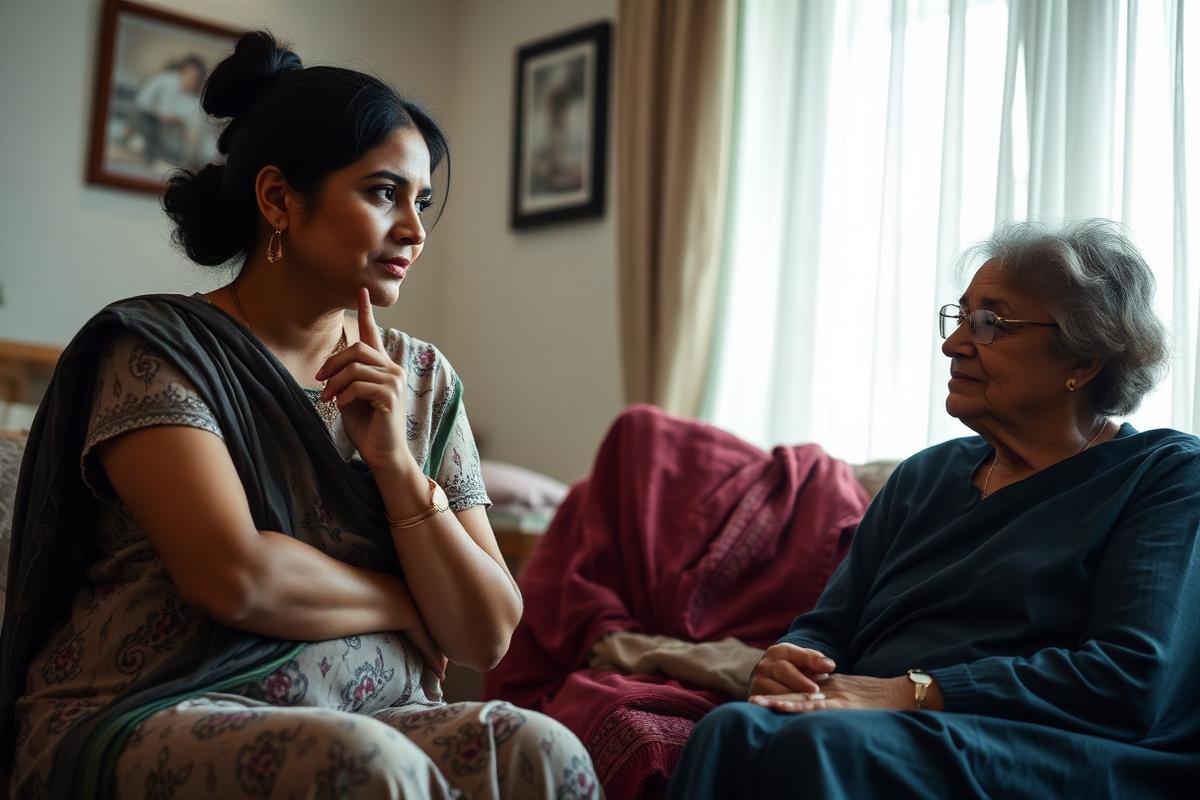
In many South Asian families, a diabetes diagnosis is managed twice: medically, and socially. The second is often harder.
People hide it from extended family. Parents worry about a daughter's marriage prospects. Relatives assign blame, you ate too much, you got lazy, you stressed too much. And underneath it all runs the quiet, powerful question: log kya kahenge? What will people say?
Diabetes distress affects a large share of people living with the condition and is independently associated with worse glycemic control. It is not weakness or a character flaw, it is a documented and treatable clinical problem.
What stigma actually costs
Stigma is not merely unpleasant. It changes behaviour in measurable, harmful ways:
- Delayed diagnosis, people avoid testing because they do not want the label.
- Hidden medication, insulin skipped in public, doses taken in bathrooms, pens left at home during travel.
- Concealed hypos, not carrying glucose tablets because someone might ask.
- Isolation, declining social events rather than negotiating food.
- Non-disclosure in marriage negotiations, creating fear, secrecy and, later, resentment.
Each of these is a direct route to worse outcomes.
The blame narrative, corrected
Type 2 diabetes is a condition with a large genetic component that shows up disproportionately in South Asians at lower body weights and younger ages. South Asian populations carry higher risk across countries, income levels and body types.
You did not cause your genes. You did not choose the food environment you grew up in. And nothing about the diagnosis says anything about your discipline, your worth or your future.
What you do control is what happens next. That is where all the useful energy belongs.
Talking to family
With parents. Older relatives often respond with fear disguised as instruction, a torrent of remedies, restrictions and warnings. Redirect toward a role: "Please walk with me after dinner" is more useful than any amount of advice-absorbing.
With a spouse or partner. Share the actual plan, not just the diagnosis. Partners who understand hypoglycemia signs and know where the glucose tablets are become genuine safety infrastructure.
With children. Age-appropriate honesty prevents anxiety. Children notice injections and finger pricks regardless; unexplained secrecy is more frightening than a simple explanation.
With extended family. You are under no obligation to disclose. Decide once, deliberately, rather than agonizing per gathering.
On marriage and disclosure
This deserves plain speech. Diabetes is a chronic condition affecting hundreds of millions of people, including a very large share of South Asian adults. Hiding a diagnosis before marriage tends to produce exactly the outcome people fear, discovery, mistrust and blame, while disclosure alongside a visible management plan usually produces the opposite.
A well-managed person with diabetes can work, travel, have children and live a full life. That framing, condition plus plan, is the honest and the strategically sound one.
Diabetes distress and depression
People with diabetes have roughly two to three times the risk of depression compared with those without. Add cultural stigma and the burden compounds, particularly for women, who in many households manage the illness alongside caring for everyone else's.
Warning signs worth taking seriously:
- Avoiding glucose checks because the number feels like a verdict
- Persistent guilt or shame about food
- Skipping medication out of hopelessness rather than forgetfulness
- Withdrawing from people you enjoy
- Feeling that nothing you do changes anything
Diabetes distress and clinical depression respond to treatment, therapy, peer support, structured education, and sometimes medication. Untreated, both reliably worsen glucose control.
Practical ways to lower the weight
Find one honest person. One relative or friend who knows everything. Total isolation is the highest-risk state.
Separate the number from your worth. A high reading is information about the last few hours, not a report card on your character.
Use peer community. Talking to other South Asians managing diabetes normalizes it faster than anything a clinician can say.
Set a boundary sentence. "I'm managing it with my doctor", repeated, unelaborated, ends most unwanted advice.
Ask for a mental health referral. Diabetes-specific counselling exists. Requesting it is a clinical action, not a confession.
How GLUCORAiQ fits
The moderated community section exists so people can ask questions they would not ask at a family dinner. The AI copilot, Dr. GLU, will answer a 2am question about a scary reading without judgement or gossip. And Family Circle lets you share exactly as much as you choose with exactly who you choose, control over disclosure is part of managing the condition.
Frequently asked questions
Should I tell my extended family about my diagnosis?
That is entirely your decision. Consider who will help versus who will comment, decide once, and stop relitigating it at every gathering.
Will diabetes affect my chances of marriage?
Diabetes is extremely common in South Asian communities and is compatible with a full life. Disclosure paired with a clear management plan is generally the stronger position, both ethically and practically.
My family says I got diabetes from eating too much. Is that true?
Diet and weight influence risk, but South Asians develop type 2 diabetes at lower weights and younger ages because of genetics, body composition and insulin secretion capacity. Blaming the individual misrepresents the science.
I feel ashamed injecting insulin in public. What can I do?
This is very common. Discreet pens and pumps help, as does rehearsing one short sentence for anyone who asks. If avoidance is causing you to skip doses, tell your care team, that is a safety matter, not an embarrassment.
How do I know if I need mental health support?
If low mood, guilt or avoidance persists for more than two weeks, or if it is causing you to skip medication or monitoring, seek support. Ask your provider specifically about diabetes distress.
Educational content only. Not medical advice. If you are experiencing severe distress or thoughts of self-harm, seek immediate help from a healthcare professional or local emergency services.