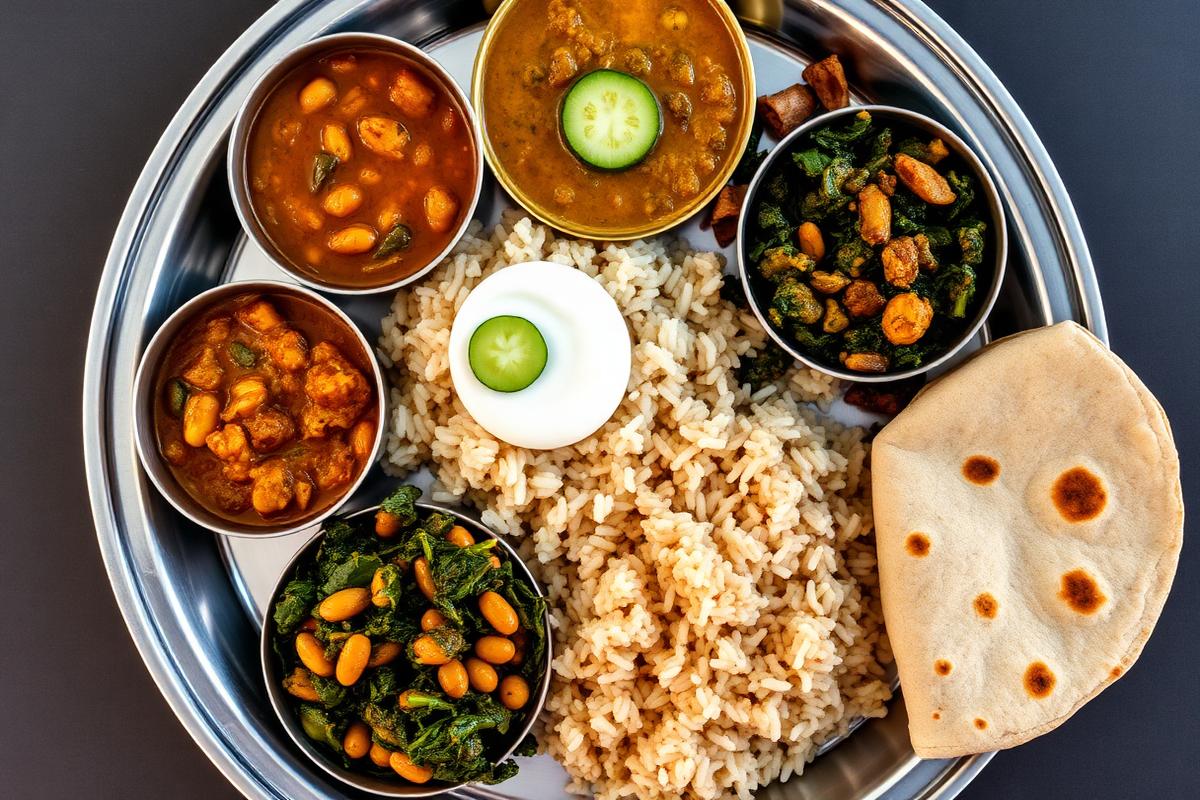
Most diabetes advice given to South Asian patients amounts to "cut the rice and roti." It is unhelpful, culturally deaf, and it fails, because a plate stripped of its centre is not a plate anyone eats for thirty years.
The better approach is engineering. South Asian cuisine already contains some of the most metabolically protective foods on earth: lentils, chickpeas, kidney beans, yoghurt, fenugreek, turmeric, bitter gourd, mustard greens, paneer. The problem is proportion, refinement and sequence.
The typical South Asian plate is roughly 70% refined carbohydrate. Rebalancing to 50% vegetables, 25% protein and 25% grain changes post-meal glucose dramatically without removing a single traditional dish.
Step 1: Fix the ratio
Draw the plate in your head before you serve.
- Half the plate: sabzi, salad, greens, bhindi, baingan, lauki, palak, methi, cabbage, gobi, kachumber, raita with cucumber.
- A quarter: protein, dal, rajma, chana, paneer, curd, eggs, fish, chicken, soy chunks, tofu.
- A quarter: the grain, rice, roti, dosa, idli, poha, upma.
Most households invert this: rice fills two-thirds, a small katori of dal sits beside it, and vegetables appear as a garnish. Simply flipping the proportions is the single largest available change.
Step 2: Choose the grain deliberately
Better choices: ragi (finger millet), bajra (pearl millet), jowar (sorghum), barley, whole-wheat atta with added bran, brown or red rice, parboiled rice, steel-cut oats.
Use with care: polished white basmati (still lower GI than most white rices), idli, dosa, poha.
Minimize: maida, naan, bhatura, samosa pastry, biscuits, white bread, most bakery items.
A practical compromise many families adopt: mix 50/50 atta with besan or bajra for rotis, and cook rice with a portion of dal or vegetables folded through so the carbohydrate density per serving drops.
Step 3: Use the cooling trick
Cooking rice, then refrigerating it, then reheating it increases resistant starch, a form of carbohydrate your small intestine does not absorb. Studies have shown meaningfully lower glucose responses to cooled-and-reheated rice compared with freshly cooked. This applies to potatoes too. Leftover rice, properly stored and reheated, is metabolically better than fresh. That is one of the rare pieces of nutrition advice that makes life easier.
Step 4: Order the meal
Vegetables and salad first. Then protein and dal. Then the rice or roti. The same food eaten in that order produces a lower, flatter glucose curve. Restaurants unintentionally get this right by serving salad first; home kitchens rarely do.
Step 5: Protein at every meal
This is the biggest gap in South Asian vegetarian eating. Aim for a protein anchor in every meal, not just dinner:
- Breakfast: besan chilla, moong dal chilla, egg bhurji, curd with nuts, paneer bhurji, instead of poha or bread alone.
- Lunch: a full katori of thick dal or rajma, not thin watery dal.
- Dinner: paneer, tofu, soy, fish or chicken alongside sabzi.
- Snacks: roasted chana, sprouts chaat, peanuts, curd, instead of biscuits and namkeen.
Step 6: The chai problem
Two teaspoons of sugar per cup, four to six cups a day, is 40–60g of added sugar before anyone eats anything. Options that work in practice:
- Reduce by half a teaspoon every two weeks until you reach zero. Gradual works; abrupt does not.
- Switch to unsweetened masala chai with more cardamom, ginger and cinnamon, the aromatics compensate for perceived sweetness.
- Never drink chai with biscuits on an empty stomach. That combination is a near-perfect glucose spike.
Step 7: Handle the festival plate
Diwali, Eid, weddings, Onam, Pongal, these are not the enemy, but they are not ordinary days either.
- Eat protein before you go.
- Take one small portion of two sweets rather than a taste of eight.
- Walk after. Not instead, after.
- Return to normal at the very next meal. The damage is done by the fortnight of leftovers, not the festival day.
Adding a bowl of dal to a rice meal lowers the glycemic load of the whole plate. Protein and fiber slow gastric emptying, the dal is doing pharmacological work, not just adding flavour.
A week of workable swaps
- White rice → parboiled or brown rice, or half rice half cauliflower rice
- Maida naan → whole-wheat roti or bajra roti
- Thin dal → thick dal, double the lentils
- Biscuits with chai → roasted chana or a handful of almonds
- Aloo sabzi as the only vegetable → aloo plus a green
- Fruit juice → whole fruit
- Sweet lassi → salted or plain curd
Frequently asked questions
How many rotis can I eat?
There is no universal number, it depends on your body, medication, activity and what else is on the plate. Start by anchoring to what you currently eat, reduce by one, add protein and vegetables to compensate, and check your glucose two hours later. Your own data beats any generic figure.
Is brown rice always better than white?
Usually, because of fiber and slower digestion, but the difference is smaller than people expect. Portion size, what you eat it with, and the order of eating matter more than the colour of the rice.
Are millets suitable for everyone?
They are a strong option for most people. If you have kidney disease or thyroid concerns, or you are making a very large dietary shift, discuss it with your clinician or dietitian first.
Does bitter gourd (karela) lower blood sugar?
There is some evidence of a modest glucose-lowering effect, but it is not a substitute for medication, and combined with glucose-lowering drugs it can contribute to hypoglycemia. Treat it as a vegetable, not a therapy, and tell your doctor if you consume it regularly.
What about intermittent fasting during Ramadan or religious fasts?
Fasting with diabetes, particularly on insulin or sulfonylureas, requires a medication plan agreed in advance with your clinician. Do not adjust doses on your own.
Educational content only. Not medical advice. Consult your healthcare provider or a registered dietitian before changing your diet or medication.