Somewhere between half and two-thirds of people in cancer treatment take a supplement. Roughly a third never tell their oncology team. That gap is where avoidable harm happens.
This is a reference, not a verdict. Bring it to your pharmacist.
The single most useful thing you can do is put every bottle in a bag and take it to your next appointment. Oncology pharmacists do this check routinely and it takes ten minutes.
How interference actually happens
Liver enzyme effects. Most oncology drugs are metabolised by CYP450 enzymes, especially CYP3A4. Anything that induces those enzymes clears the drug too fast; anything that inhibits them lets it build to toxic levels.
Antioxidant interference. Radiation and several chemotherapy classes work partly by generating oxidative damage in tumour cells. Supplement-level antioxidants may blunt that. Food-level intake is not the concern.
Bleeding risk. Many botanicals affect platelets or clotting, which matters around surgery, biopsies and low platelet counts.
Hormonal activity. Phytoestrogen concentrates need individual discussion in hormone-receptor-positive disease.
Liver and kidney load. Your organs are already clearing potent drugs.
Generally avoid during active treatment
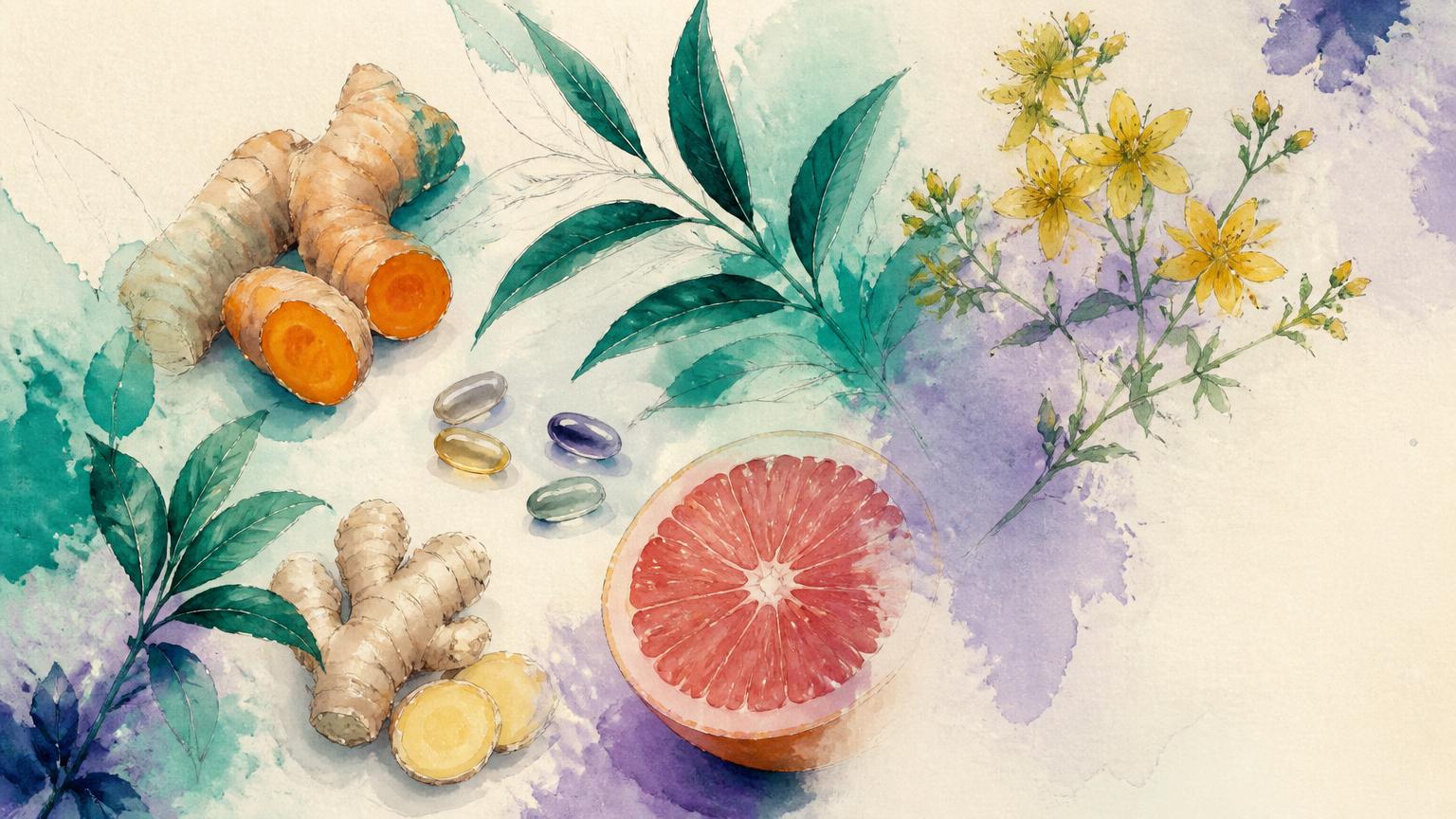
- St. John's wort, a strong CYP3A4 inducer; can substantially lower levels of imatinib, irinotecan, docetaxel and many others. Widely considered contraindicated.
- Grapefruit, Seville orange, pomelo, CYP3A4 inhibitors; can push oral drug levels toward toxicity.
- High-dose vitamin C, vitamin E, N-acetylcysteine, beta-carotene, antioxidant interference during radiation and certain chemotherapies.
- Concentrated green tea extract (EGCG), reported interference with bortezomib; high-dose extracts also carry hepatotoxicity reports.
- Kava, comfrey, chaparral, high-dose niacin, hepatotoxicity risk.
- Echinacea and high-dose immune "boosters", theoretical interference with immunotherapy, both directions; discuss before use.
Pause around surgery and procedures
Typically 1–2 weeks before, on your team's instruction: fish oil, high-dose vitamin E, garlic supplements, ginkgo, ginger at supplement doses, turmeric/curcumin, dong quai, feverfew.
Discuss individually
- Turmeric/curcumin, affects drug metabolism and platelets; culinary amounts differ from supplements.
- Soy, whole foods are generally considered safe and are viewed favourably in survivorship data; concentrated isoflavone extracts need discussion in hormone-receptor-positive breast cancer.
- Melatonin, some supportive data for sleep; dose and timing matter.
- Medicinal mushrooms (reishi, turkey tail, maitake), biologically active, immune-modulating, and worth clearing before use.
- Ashwagandha, immune-modulating with hepatotoxicity reports.
- CBD and cannabis, real symptom benefit for some, and real CYP interactions; disclose rather than assume it is neutral.
- Traditional Chinese, Ayurvedic and herbal preparations, often multi-ingredient and sometimes contaminated with heavy metals. Bring the actual packaging.
Often appropriate, with your team's sign-off
- Vitamin D to correct a documented deficiency
- Vitamin B12, iron, folate for documented deficiencies
- Calcium and vitamin D on aromatase inhibitors or androgen deprivation therapy for bone protection
- Ginger as an adjunct for chemotherapy-induced nausea
- A standard multivitamin at ordinary doses, if your team agrees
- Protein or oral nutrition supplements for weight and muscle maintenance
- Glutamine, B6 or others for specific side effects, sometimes prescribed, but only on advice
And the ones for your diabetes
Tell the oncology team about these too. Berberine, cinnamon extract, chromium, alpha-lipoic acid, bitter melon and fenugreek all have glucose-lowering activity, which becomes unpredictable when steroids are pushing your glucose up and your intake is erratic. Berberine in particular has meaningful CYP interactions.
How to have the conversation
- Put every bottle in a bag, supplements, herbs, teas, powders, topicals.
- Ask for the oncology pharmacist, not just the doctor. Interaction checking is literally their job.
- Ask three questions: which do I stop, which do I pause around infusions or surgery, and which are fine?
- Ask for the answer to go in your chart.
- Re-check whenever your regimen changes.
Nobody is going to shame you for taking things. They will, however, be able to help only if they know.
Frequently asked questions
My multivitamin is low-dose. Is that a problem?
Usually not, but confirm it. Standard-dose multivitamins are commonly permitted; the risk sits with high-dose single nutrients and concentrated botanical extracts.
Why did my oncologist say no to antioxidants when they are healthy?
Because part of how radiation and several chemotherapies kill tumour cells is oxidative damage, and supplement-level antioxidants may reduce that effect. Antioxidants from food are not the same conversation.
Are herbal teas fine?
Ordinary teas usually yes; medicinal or multi-herb blends need checking, particularly during immunotherapy or with liver involvement. Green tea as a drink is different from EGCG capsules.
Can I restart everything after treatment ends?
Ask before you do. Some restrictions lift at the end of treatment; others continue on long-term therapies like aromatase inhibitors or maintenance drugs. Get a written survivorship plan that covers supplements specifically.
Educational content only, not medical advice. Do not start, stop or change any supplement, herb or medication during cancer treatment without your oncology team's guidance.