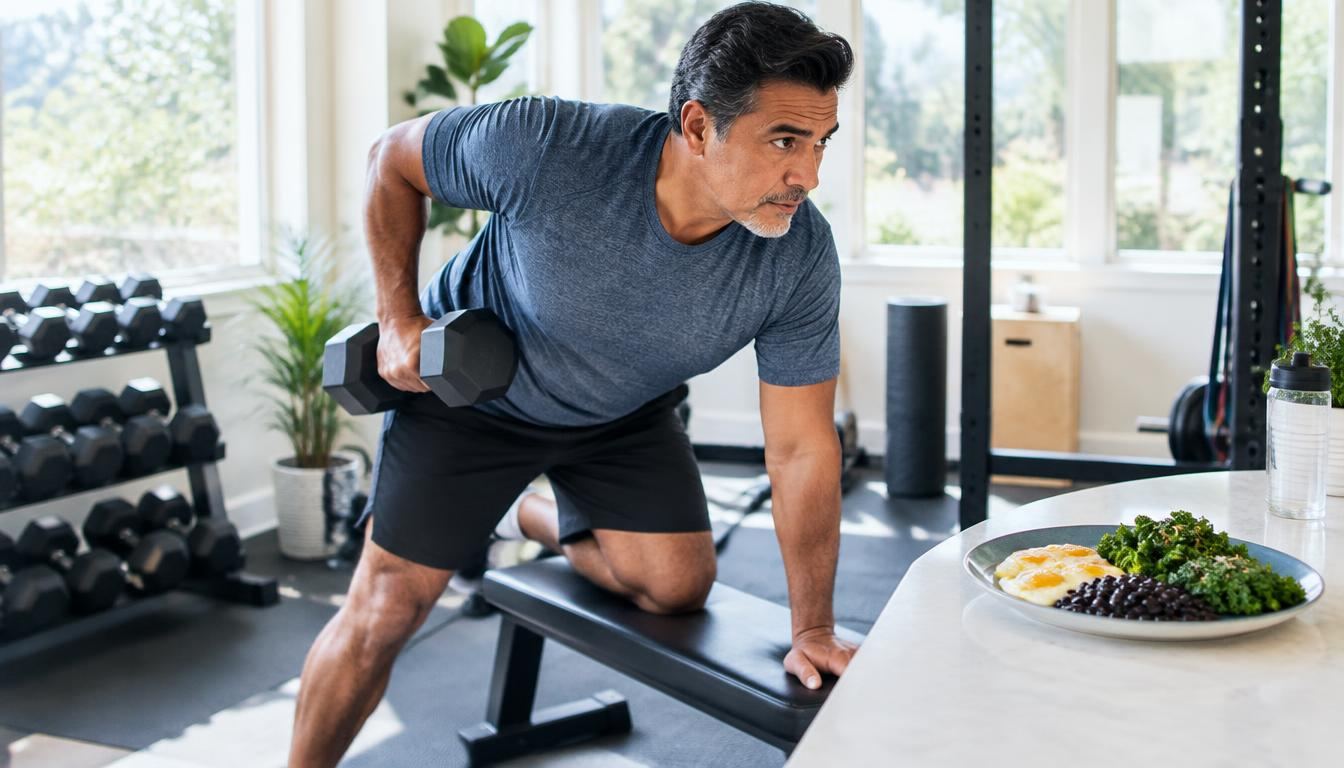
One of the most common questions from people starting a GLP-1 is simple: "Am I losing fat or muscle?" Research suggests a meaningful share of weight lost on any rapid program can come from lean tissue. Muscle is your largest glucose sink, so keeping it is one of the best things you can do for long-term blood sugar.
Why muscle matters for glucose
After a meal, skeletal muscle takes up most of the glucose that leaves your bloodstream. More muscle and more active muscle mean a larger, more responsive place for that glucose to go. This is why strength training improves insulin sensitivity even when the scale does not move.
Rapid weight loss without strength training can reduce muscle and bone. Ask your clinician whether a body composition scan or grip strength check makes sense for you.
A protein target that fits a small appetite
Many dietitians suggest a range around 1.0 to 1.2 grams of protein per kilogram of body weight for older adults during weight loss, sometimes more. Your needs depend on kidney health and other conditions, so confirm a number with your care team.
Practical ways to get there:
- Start each meal with the protein portion before carbs.
- Use protein-dense foods by culture: eggs and beans, fish and rice, dal and paneer, tofu and edamame, chicken and plantain, Greek yogurt and nuts.
- Add a protein snack mid-afternoon when appetite is often highest.
- Consider a shake on low-appetite days, checking the sugar content.
Try it in GLUCORAiQ™
Build a week of meals with MEALiQ
Recipes from your own food culture, balanced for steady glucose.
The 20-minute strength routine
Do this twice a week, resting a day between sessions.
- Sit-to-stand from a chair: 3 sets of 8 to 12.
- Wall or counter push-ups: 3 sets of 8 to 12.
- Band or dumbbell rows: 3 sets of 10 each side.
- Hip bridges: 3 sets of 12.
- Farmer carry: walk 30 seconds holding a bag in each hand, 3 rounds.
Increase reps or weight when the last two reps feel easy. If you use insulin, check glucose before and after until you know your pattern.
Try it in GLUCORAiQ™
Get a Body iQ movement plan
Upload a photo and receive strength and posture work matched to your body and goals.
Signs you may be losing muscle
- Climbing stairs or standing from a chair feels harder.
- Grip weakens when opening jars.
- Fatigue that does not match your activity level.
- Weight loss that feels "soft" rather than stronger.
Frequently asked questions
Should I eat more calories to keep muscle?
Not necessarily. Focusing on protein quality and strength work usually matters more than total calories. A dietitian can help balance both.
Is walking enough?
Walking is excellent for glucose, but it does not load muscles the way resistance training does. Use both.
Can seniors safely lift weights?
Yes, with guidance. Start light, focus on form, and ask your clinician about any joint, heart or balance concerns.
Do protein shakes spike glucose?
Some contain added sugar. Choose options with low added sugar and check your glucose response the first few times.
This article is educational and is not medical advice. Talk with your clinician or pharmacist before changing any medication, supplement or exercise plan.